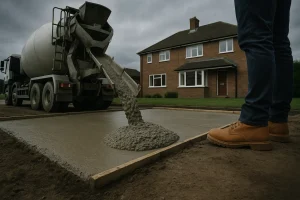
You’ve just poured your concrete, and now comes the most critical part of the entire project—finishing the surface. As a master concreter with three decades of experience, I’ve seen countless DIYers rush this stage and ruin otherwise perfect pours. The difference between a professional-looking finish and a disappointing disaster often comes down to one simple concept: patience.
Here’s the golden rule that separates the pros from the amateurs: Never start finishing until the bleed water has completely disappeared. Bleed water is the thin layer of water that rises to the concrete surface after pouring—it’s a natural part of the process, but working on it too early creates weak, flaky surfaces that will fail prematurely. Wait until this water evaporates and the surface loses its wet sheen. This patience will determine the success of everything that follows.
Stage 1: Screeding (The Foundation of Everything)
When to do it: Immediately after pouring, before any waiting period.
Screeding represents your first and most important action. This initial levelling creates the foundation for all subsequent finishing work, so getting it right matters enormously.
The Goal: Strike off excess concrete and create a flat, uniform surface that follows your formwork precisely.
The Tool: A long, straight piece of timber (2×4 works perfectly) or a purpose-made metal screed board that spans your formwork.
The Action: Place the screed board across your formwork and use a sawing motion whilst pulling the excess concrete towards you. Work systematically across the entire pour, overlapping each pass slightly. Don’t just drag the board—the sawing action helps level whilst the pulling motion removes excess material.
This stage sets your levels perfectly, but the surface will look rough and wet. Resist any urge to smooth it immediately—patience pays dividends in concrete finishing.
Stage 2: Floating (Bringing the Cream to the Top)
When to do it: After bleed water has vanished and the surface has lost its wet sheen.
Floating transforms your rough screeded surface into something approaching a finished product. This stage requires perfect timing—too early and you’ll bring bleed water back to the surface; too late and the concrete becomes too stiff to work properly.
The Goal: Embed coarse aggregate just below the surface whilst bringing a rich layer of mortar to the top. This creates the smooth, workable surface essential for final finishing.
The Tools: A bull float (large float on a long handle) for main areas, plus a smaller hand float for edges and corners.
The Action: Sweep the float across the surface in wide, overlapping arcs. Keep the leading edge slightly raised to avoid digging into the surface. Work systematically to ensure even coverage across the entire slab.
When choosing the right concrete for your project, proper floating reveals the quality of your mix. Good concrete should respond smoothly without excessive bleeding or stiffness.
Stage 3: Edging (Creating Professional Details)
When to do it: Immediately after floating, whilst the concrete remains workable.
Professional concrete finishers never skip edging because they understand that edges receive the most abuse and need the most protection. This stage creates the clean, rounded profiles that resist chipping and spalling for decades.
The Goal: Form neat, rounded edges that look professional whilst providing superior durability compared to sharp, vulnerable corners.
The Tool: A purpose-made edging tool with a curved profile.
The Action: Run the tool smoothly between concrete and formwork, maintaining consistent pressure and speed. The curved tool creates the rounded profile whilst compacting the edge material for maximum durability.
This stage often reveals formwork issues—wobbly boards or poor alignment become obvious during edging. Quality formwork makes this stage effortless, whilst poor preparation creates ongoing difficulties.
Stage 4: Troweling (The Final Polish)
When to do it: After the slab has firmed sufficiently that finger pressure leaves only shallow indentations.
Troweling represents the culmination of concrete finishing—the stage that creates the final surface texture and density. This stage demands the most skill and experience, but following proper technique produces professional results.
The Goal: Create a dense, hard, smooth surface through mechanical compaction and smoothing.
The Tool: Steel trowel with a comfortable handle and smooth, clean blade.
The Action: Use long, sweeping motions with the leading edge slightly raised. Apply firm pressure whilst maintaining smooth, consistent passes. The first troweling smooths and densifies; a second pass later (when the concrete has stiffened further) creates an even harder, more polished finish.
Understanding understanding concrete composition helps explain why troweling works—you’re essentially compacting the surface layer whilst creating a smooth, wear-resistant finish.
Stage 5: Creating a Non-Slip Finish (Essential for UK Conditions)
When to do it: After final troweling, whilst the surface remains slightly workable.
In the UK’s damp climate, a mirror-smooth trowelled finish often creates dangerous slip hazards. Professional finishers routinely add texture for safety whilst maintaining the durability benefits of proper troweling.
The Goal: Create subtle texture that provides slip resistance without compromising surface quality.
The Tool: Clean, stiff-bristled broom (avoid soft bristles that leave deep marks).
The Action: Gently drag the broom across the surface in one consistent direction. Apply just enough pressure to create light texture lines without disturbing the underlying surface.
This brush finish concrete UK technique provides the perfect balance between safety and aesthetics for most outdoor applications.
Professional Tips for Success
These concrete finishing tools work best when kept meticulously clean—dirty tools create marks and imperfections that cannot be corrected once concrete hardens. According to the Health and Safety Executive, avoid prolonged skin contact with wet concrete, and always wear appropriate protective equipment.
For complex projects like how to lay a concrete shed base, these finishing stages determine both appearance and long-term performance. When you’re ready to explore advanced techniques, our guide to the top 10 concrete finishing techniques provides inspiration for decorative and specialist applications.
Conclusion
Concrete finishing demands patience, proper timing, and systematic technique. Each stage builds upon the previous one, creating the cumulative effect that separates amateur work from professional results. Remember: concrete gives you one chance to get it right—rushing any stage compromises everything that follows.
The sequence of screed, float, edge, trowel, and texture represents generations of refinement by craftsmen who understood that great concrete finishing comes from respecting the material’s natural behaviour whilst applying skilled technique at precisely the right moments.
Frequently Asked Questions
What happens if I start finishing while bleed water is still there? Working on bleed water creates a weak, chalky surface layer that will eventually dust off or flake away. Always wait until the surface has lost its wet sheen before beginning any finishing operations beyond initial screeding.
Why are cracks appearing on my new concrete? Early cracking often results from rapid surface drying, excessive working of the surface, or starting finishing operations too early. Plastic shrinkage cracks appear within hours and indicate the surface is losing moisture faster than it can be replaced from below.
How do I know if my concrete is ready for the next finishing stage? Each stage has visual and tactile cues: floating when bleed water disappears, edging when floating is complete, troweling when finger pressure leaves minimal marks. Experience teaches recognition of these subtle changes in concrete behaviour.
Can I fix mistakes after the concrete has hardened? Minor surface imperfections can sometimes be ground or polished out, but major finishing errors usually require surface overlays or complete replacement. Prevention through proper technique and timing proves far more economical than attempted corrections.