For small jobs like setting a single fence post, patching a pathway crack, or creating a small garden stepping stone, ready-mix concrete bags offer a handy DIY solution. They’re convenient, widely available, and perfect for those weekend projects that don’t justify calling in the professionals. However, success depends on understanding both how to use them properly and—just as importantly—recognising when they’re not the right tool for the job.
This guide provides foolproof instructions for mixing bagged concrete correctly, followed by honest expert advice about when to put the bag down and reach for the phone instead.
Part 1: The Step-by-Step Guide to Getting It Right
Safety First, Always
Before touching any cement product, understand that concrete mix contains caustic materials that can cause serious burns to skin and eyes. According to the UK’s Health and Safety Executive, proper protection is non-negotiable. Wear protective gloves, safety goggles, and long sleeves. Keep a water source nearby for emergency eye washing, and never work with concrete in windy conditions that could blow dust into your face.
Get Your Kit Ready
Gather these essentials before opening any bags:
- Ready-mix concrete bags (calculate 1 bag per fence post or 4-5 bags per square metre for a 100mm thick base)
- Clean wheelbarrow or large mixing tub
- Shovel or garden hoe for mixing
- Measuring jug for water
- Protective equipment
- Clean water source
The Process: Achieving the Perfect Mix
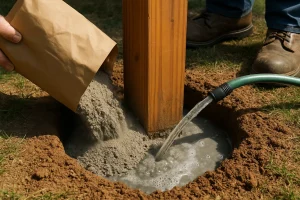
Step A: Dump the Dry Mix Empty the entire bag into your wheelbarrow—never try to use partial bags as this disrupts the engineered ratios. Create a “well” or crater in the centre of the dry mix, like making a volcano shape. This well controls water distribution during mixing.
Step B: Add Water SLOWLY This step makes or breaks your concrete. Most bags specify water quantities (typically 2-3 litres per 25kg bag), but start with only half that amount poured into the central well. Remember: you can always add more water, but you cannot remove excess water once added. How much water for concrete bag UK specifications varies by manufacturer, so check the packaging for specific guidance.
Step C: Mix, Mix, Mix Using your shovel or hoe, gradually pull dry material from the edges into the water, mixing thoroughly. Work systematically around the wheelbarrow, scraping the bottom and sides to ensure no dry pockets remain. This mixing cement by hand process requires patience—rushing creates inconsistent results.
Step D: Check the Consistency Proper DIY concrete mix should resemble thick porridge or cake batter. It should hold its shape when formed into a peak but not be so dry that it crumbles. Test by making a small mound—if it slumps immediately, it’s too wet; if it won’t hold together, it’s too dry. Add water gradually (tablespoons at a time) or more dry mix to achieve the right consistency.
Step E: Use Immediately Mixed concrete begins setting within 20-30 minutes, faster in warm weather. Work quickly but carefully to place and finish your concrete before it becomes unworkable.
Part 2: The Honest Warning – When a Bag Is Not Enough
Now for some crucial advice from the professionals that could save you time, money, and frustration.
Define the Threshold
If your project requires more than 5-10 bags—equivalent to a small patio base or more than a few fence posts—the disadvantages of bagged concrete start outweighing the convenience. Beyond this threshold, you’re entering territory where professional concrete delivery becomes the smarter choice.
The Problems with Using Lots of Bags
Inconsistent Strength Achieving identical water ratios across multiple hand-mixed batches is virtually impossible. One batch might be slightly wet, another too dry, creating weak spots that compromise your entire project. When exploring different types of concrete strengths, consistency matters as much as individual batch quality.
Exhausting Physical Labour Mixing 10+ bags by hand represents hours of back-breaking work. Each 25kg bag requires 5-10 minutes of vigorous mixing, turning a weekend project into a grueling endurance test that increases mistake probability as fatigue sets in.
Surprisingly Expensive Per cubic metre, buying dozens of bags costs significantly more than professional concrete delivery. A large patio requiring 20-30 bags might cost £200-300 in materials alone, before factoring in tool rental and physical toll. Professional delivery often costs less whilst guaranteeing consistent quality.
Limited Mix Options Bagged concrete typically offers basic, general-purpose mixes. Professional suppliers provide engineered solutions for specific applications—high-strength mixes for foundations, rapid-setting options for time-critical work, or specialised formulations for challenging conditions.
The Professional Solution
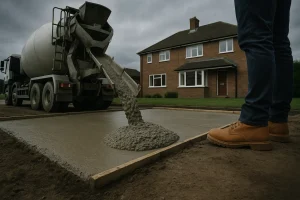
For projects exceeding the 5-10 bag threshold, volumetric or ready-mix concrete delivery offers the hassle-free, guaranteed-quality solution that often saves both time and money. Professional concrete arrives precisely mixed to specification, eliminates physical mixing labour, and provides consistent strength throughout your project.
Understanding what is ready-mix concrete reveals why it’s become the standard choice for most construction projects. The quality assurance, convenience, and often lower total cost make professional delivery the logical choice once projects exceed small repair work.
Use our concrete calculator to compare costs between multiple bags and professional delivery—the results often surprise DIYers planning larger projects.
Making the Smart Choice
Concrete bags excel for genuine small-scale work: setting a few fence posts, small repairs, or experimental projects where you’re learning techniques. They provide valuable experience with concrete handling whilst keeping stakes low and costs manageable.
However, don’t let false economy drive decisions on substantial projects. Professional concrete delivery isn’t just about convenience—it’s about guaranteeing results that will last decades rather than requiring expensive do-overs when inconsistent mixing creates premature failures.
The key lies in honest self-assessment: if you’re contemplating whether bags are suitable, they probably aren’t. When in doubt, consult professionals who can provide accurate cost comparisons and ensure your project achieves the longevity and performance you expect.
Frequently Asked Questions
How long do I have to use concrete once it’s mixed? Mixed concrete remains workable for 20-30 minutes in average conditions, less in hot weather or with rapid-setting mixes. Plan your work to complete placement and basic finishing within this window, as concrete becomes increasingly difficult to work as it begins setting.
What’s the difference between concrete mix and mortar mix bags? Concrete mix contains larger aggregates (gravel) and is designed for structural applications like foundations and slabs. Mortar mix uses only sand as aggregate and is intended for laying bricks or blocks. Never substitute one for the other as their properties differ significantly.
Can I add more water if my concrete starts getting stiff? No, adding water to partially set concrete severely weakens the final product. If concrete becomes unworkable before placement is complete, discard it and mix fresh batches. This waste is why professional delivery often proves more economical for larger projects.
How much concrete does one bag make? A standard 25kg bag produces approximately 12-13 litres of concrete, or about 0.012 cubic metres. This covers roughly 0.12 square metres at 100mm thickness—helpful for calculating requirements and comparing costs with professional delivery options.