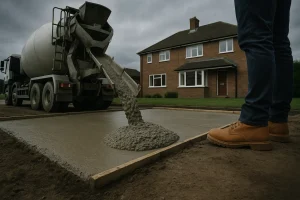
Getting the perfect concrete finish can make or break your project. Whether you’re laying a new driveway, creating a stunning patio, or working on commercial flooring, the finishing technique you choose will determine both the appearance and functionality of your concrete surface.
Let’s dive into the ten most important concrete finishing techniques that every property owner and contractor should understand.
1. Trowel Finishing
The trowel finish is the most common technique for creating smooth, dense concrete surfaces. This method involves using a steel trowel to compress and smooth the concrete surface after it’s been floated. The result is a hard, durable surface that’s perfect for indoor floors and areas that need to withstand heavy traffic.
For best results, timing is crucial. You’ll want to start troweling when the concrete has begun to set but still has some workability. Multiple passes with the trowel will create an increasingly smooth finish.
2. Broom Finishing
When you need a non-slip surface, broom finishing is your go-to technique. This involves dragging a broom across the concrete surface while it’s still wet, creating small grooves that provide excellent traction. It’s particularly popular for driveways, walkways, and pool decks where safety is paramount.
The texture can be adjusted by using different broom types – from fine-bristled brushes for subtle texture to coarse brooms for more aggressive slip resistance.
3. Stamped Concrete
Stamped concrete has revolutionised decorative concrete work. This technique uses rubber stamps or molds to create patterns that mimic brick, stone, tile, or even wood. The process involves pressing these stamps into the concrete surface while it’s still workable, then often adding colour to enhance the realistic appearance.
This finishing method is excellent for patios, driveways, and walkways where you want the durability of concrete with the aesthetic appeal of natural materials. Understanding concrete composition and process is essential when working with stamped concrete, as the mix design affects how well the stamps will work.
4. Exposed Aggregate
Exposed aggregate finishing reveals the natural beauty of the stones and sand within the concrete mix. This technique involves removing the top layer of cement paste to expose the decorative aggregate underneath. The result is a textured, non-slip surface with excellent visual appeal.
The process typically involves washing and brushing the surface with water and a stiff brush while the concrete is still somewhat soft. Timing is critical – too early and you’ll wash away too much cement, too late and the aggregate won’t be properly exposed.
5. Float Finishing
Float finishing creates a relatively smooth surface with a slight texture. This technique uses a float (typically made of wood, plastic, or magnesium) to level and smooth the concrete surface. It’s often used as a preparatory step before other finishing techniques or as a final finish for surfaces that need moderate slip resistance.
The float finish is particularly useful for exterior surfaces where you need some texture for traction but don’t want the roughness of a broom finish.
6. Polished Concrete
Polished concrete finishing transforms ordinary concrete into a glossy, mirror-like surface. This process involves grinding the concrete surface with progressively finer diamond pads, followed by the application of a chemical densifier and polish.
The result is a stunning, low-maintenance surface that’s increasingly popular in commercial and residential settings. Carbon reduced concrete options are becoming more popular for polished finishes as environmental concerns grow.
7. Acid Staining
Acid staining creates unique, variegated colours in concrete surfaces through a chemical reaction with the minerals in the concrete. This technique produces rich, translucent colours that can’t be achieved with conventional stains or paints.
The process involves applying acid-based stains to clean, prepared concrete surfaces. The stain reacts with the lime content in the concrete, creating permanent colour that won’t chip, peel, or fade.
8. Salt Finishing
Salt finishing creates a unique, pitted texture that’s both decorative and functional. This technique involves broadcasting rock salt over the concrete surface while it’s still wet, then pressing it in with a float. Once the concrete has cured, the salt is washed away, leaving behind small holes and an interesting texture.
This finish is particularly popular for pool decks and decorative walkways where the texture provides slip resistance while creating visual interest.
9. Swirl Finishing
Swirl finishing creates curved, overlapping patterns in the concrete surface using a float moved in circular motions. This technique produces an attractive, non-slip surface that’s perfect for driveways, patios, and walkways.
The swirl pattern can be varied by changing the size of the circular motions and the pressure applied. It’s a relatively simple technique that can add significant visual appeal to plain concrete surfaces.
10. Sandblasting
Sandblasting is used to create texture on hardened concrete surfaces or to expose aggregate. This technique involves blasting the concrete surface with sand or other abrasive materials under high pressure. It can create various textures depending on the abrasive material used and the pressure applied.
Sandblasting is particularly useful for preparing surfaces for coatings or creating uniform texture on large areas.
Choosing the Right Technique
The best finishing technique for your project depends on several factors including the intended use, aesthetic preferences, and budget. For high-traffic areas, prioritise durability and slip resistance. For decorative applications, consider techniques like stamping or acid staining.
Remember that proper concrete mixing and placement are crucial for any finishing technique to work effectively. How to mix concrete properly will ensure you have the right consistency and workability for your chosen finish.
When planning your concrete project, consider consulting with professionals who can recommend the best finishing technique for your specific needs and ensure proper installation.